Welcome back! Pick up where you left off.

Confirm your plan and zipcode
Select from 3 of our most popular plans for your zipcode
2 days free per week
100% solar

Reliant Flextra Credits 24 plan

Get your 2 highest-use days a week FREE + $200 in bonus bill credits for extra savings.


Fixed rate
Price protection

Reliant Secure Advantage 24 plan

Straightfoward plan with a locked-in energy charge.


For renters
Popular in your area

Reliant Apartment 12 plan

Designed exclusively for smaller spaces.


Term
2 Months
Rate
Fixed

Pricing Details

USAGE
AVG PRICE / KWH
500 kWh
1,000 kWh
2,000 kWh

Early cancellation fee

Plan Features
Product

Pricing Details

USAGE
AVG PRICE / KWH
500 kWh
1,000 kWh
2,000 kWh

Early cancellation fee

*Average Price per kWh assumes noted usage per month and specific LP&L Delivery Charges (i.e., Residential Service or Residential Distributed Renewable Generation Service). For additional information regarding plan pricing and other terms, please see the Electricity Facts Label, on the Plan Details page. Price shown is for new customers only.

How to choose the right electricity plan when moving to Texas


Moving to Texas with your family and need help choosing an electricity plan? This guide explains how Texas electricity plans work, the differences between fixed and variable plans, including time‑of‑use options, and how to use the Electricity Facts Label (EFL) to compare plans based on real household usage.

How to choose the right electricity plan when moving to Texas

How to choose the right electricity plan when moving to Texas


Moving to Texas with your family and need help choosing an electricity plan? This guide explains how Texas electricity plans work, the differences between fixed and variable plans, including time‑of‑use options, and how to use the Electricity Facts Label (EFL) to compare plans based on real household usage.

Published Date: February 12, 2026

Different types of electricity plans in Texas for families

When you’re getting ready to move, choosing an electricity plan may not be the first thing on your mind, but it soon becomes an important part of your moving checklist. As you think about how your family uses energy in a new home, from cooling and cooking to everyday devices, it helps to understand what makes the Texas electricity market different and what to expect as you start comparing plans. With over 100 retail electricity providers and electricity plans available across Texas, you may feel a bit overwhelmed at first. But with some basic knowledge and research, you can find an affordable plan that truly fits your family.1

Whether you're relocating to Dallas, Houston, Lubbock or any of the surrounding areas, understanding Texas electricity plans before you arrive means one less thing competing for your attention during move-in week. This guide breaks down Texas electricity plans for households with multiple family members, helping you find a plan that fits your budget and usage patterns.


Texas state icon outline in cyan

How do I choose an electricity plan in Texas?

Compare plan types, then review each plan's Electricity Facts Label (EFL), which shows pricing, fees and usage details in one place, so you can choose an option that fits your household’s energy use.


How does the Texas electricity market work?

In Texas, you might notice that you have more of a say in how you power your home, because in most areas throughout the state, the electricity market is deregulated. This means you’re not tied to a single utility. You can choose or switch electricity providers and plans based on what works best for your home, your budget and your family’s routines. However, your home is still served by a local utility, known as a Transmission and Distribution Service Provider (TDSP), which delivers electricity and maintains power lines in your area. 

How electricity gets from the grid to your home in Texas:

How the Texas deregulated electricity market works


TDSP vs. REP explained

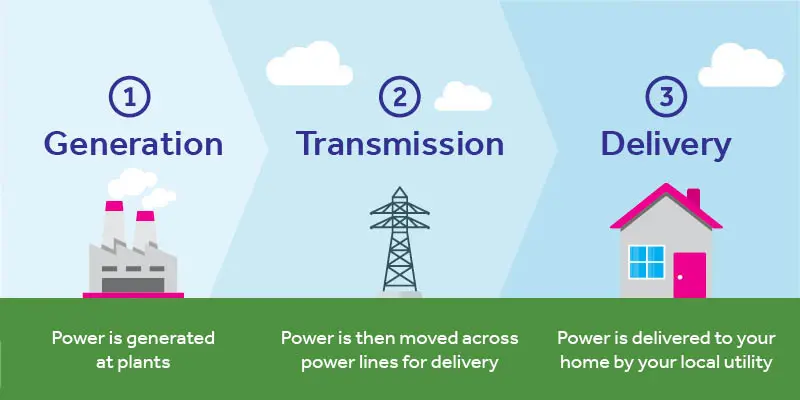
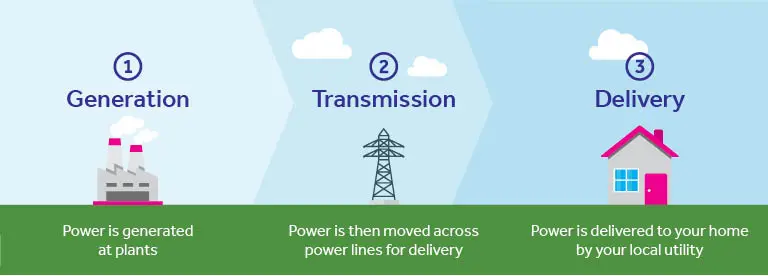
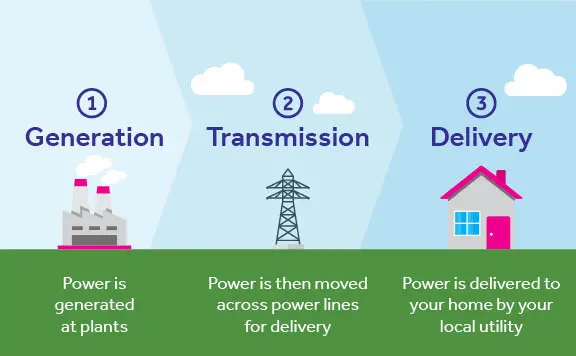
Behind the scenes, the system is simpler than it sounds. Power is generated at plants, moved across power lines and then delivered to your home by your local utility or your Transmission and Distribution Service Provider (TDSP). Your TDSP (sometimes called a TDU or Transmission and Distribution Utility) maintains the power lines, poles and transmission infrastructure, while your Retail Electric Provider (REP) is the company you choose for your electricity plan in Texas.

Quick glossary for Texas newcomers

There are four common terms you should familiarize yourself with as you shop around for an energy provider:

  • Kilowatt-hours (kWh): The basic unit of electricity your home uses. A kilowatt is equivalent to 1,000 watts of electricity. kWh stands for kilowatt-hour, which represents the use of one kilowatt of power over one hour.
  • Retail Electric Provider (REP): The electricity company you choose for your plan, rate and billing.
  • Electricity Facts Label (EFL): A required document from your electricity provider that outlines plan details, including rates, fees and usage‑based pricing.
  • Transmission and Distribution Service Provider (TDSP): The utility company that maintains power lines, restores outages and delivers electricity to your home, such as CenterPoint, Oncor, TNMP or AEP Texas.

Explore the complete electricity glossary for customers to quickly understand the terms you'll see while comparing plans. Once you know how your household uses electricity, it’s easier to see which plan makes the most sense.


Plan type
Rate structure
Family moving plan
Fixed-rate plans Fixed energy charge To own or rent long-term in Texas with predictable monthly bills
Variable-rate plans Depends on market rates and other factors To move into a short‑term or temporary home in Texas with plan flexibility and no long‑term contract 
Time-of-use plans A type of fixed-rate plan where the energy charge may differ depending on the time of day energy is used To move into a home in Texas where families can shift the most of their electricity use to nights or weekends

What types of electricity plans are available in Texas?

The next step in choosing an electricity plan is deciding whether a fixed or variable rate option best fits your family’s daily energy habits, and whether a time‑of‑use option within a fixed‑rate plan aligns with your routines. When comparing plans, it helps to know that advertised electricity rates typically refer to the energy charge per kilowatt‑hour (kWh), and your total bill may also include delivery charges, base charges and other applicable fees. Retail electricity providers across Texas offer a range of options, each with different benefits depending on your home size and budget.

Fixed‑rate electricity plans 

Planning and predictability are everything for busy households. A fixed-rate plan keeps your energy charge steady for the length of your contract, often 12, 24 or 36 months, which makes billing more predictable and helps you manage monthly costs. Some fixed-rate plans also include time-of-use pricing, where energy charges are set amounts during specific hours of the day or days of the week. These plans can be especially helpful in summer when AC usage climbs. For families looking for stability, a fixed-rate electricity plan in Texas makes it easier to anticipate monthly energy costs.

Variable‑rate electricity plans

Variable‑rate plans do not typically require a contract and pricing can change month to month, which can work for families in short‑term situations like house‑hunting trips or corporate relocations. However, variable rates can spike during extreme heat, which is common in Texas summers. Due to price volatility, a family may be better off choosing a more predictable option for their home, such as a fixed-rate plan.

Time-of-use fixed-rate plans (Free Nights and Free Weekends plans)

If you’re able to adjust your routines to the plan’s schedule, time‑of‑use fixed‑rate plans can help some families lower costs. These plans apply fixed energy charges during specific times of the day or days of the week. That means if you do most of your laundry, dishes or electric vehicle (EV) charging at night, or concentrate energy use on weekends, a Truly Free Nights or Truly Free Weekends plan may work better for your household.

Understanding these differences makes it easier to compare Texas electricity rates and choose a plan that supports your household’s energy habits.


Flextra Credits 100% Solar electricity plan logo
Save more with Flextra Credits

Get $200 in annual bill credits and 2 days of FREE electricity every week with the Reliant Flextra Credits plan.

Unlock the power to save

How much electricity will your new Texas home use?

When you have more than one family member living with you, it can be difficult to estimate how much energy you use daily. Before you use a bill estimator, it helps to know what to look at to make your energy plan work for you. 

Factors that affect household energy use 

Can your household habits affect your energy use? You may be able to improve energy efficiency if you or the people you live with:

  • Change thermostat settings frequently
  • Leave devices or electronics plugged in, including so‑called "energy vampires"
  • Spend a lot of time watching TV, using computers or gaming consoles
  • Leave lights on in unused rooms
  • Run high‑use appliances like the dryer or dishwasher often

The average Texas family home is about 2,000 sq. ft.2 Homes 1,500-2,500 sq. ft. in size use about 1,177 kWh per month, although this will vary based on individual usage.3 When estimating your home’s monthly usage, it can help to think of each additional family member as adding roughly 390-400 kWh per month to your overall energy use. If you’re looking at older homes to live in, you might also want to account for less efficient insulation and HVAC systems.

These insights help you determine which Texas electricity plan will be most cost‑effective based on your home’s real usage.

Texas-specific energy usage patterns families should consider

Summers in Texas can come as a surprise if you aren’t used to triple-digit temperatures and high humidity. You’ll likely see your energy use increase whenever you turn your AC on, as temperatures start to rise in Texas between May and August. 

Depending on your kids’ school schedules, you may also notice your energy usage drop when they are in school compared to when they are on seasonal breaks and holidays. And if you work from home, it helps to factor in daytime cooling costs before choosing an electricity plan.

One way to find out how much energy your home uses is by asking your current provider for your 12-month usage history before you move. Collecting this information can give you a general baseline to refer to when getting into the details of different electricity plans in Texas.

How to compare electricity plans in Texas

Once you understand how deregulated electricity works in Texas, the next step is comparing plans based on how your family actually uses electricity.

What is the Electricity Facts Label (EFL) and why does it matter?

In deregulated parts of Texas, every residential plan includes an Electricity Facts Label (EFL), which works like a nutrition label for your electricity plan. It outlines the price per kWh, contract length, fees and any special conditions so you can compare options easily. Most EFLs list average prices at 500, 1,000 and 2,000 kWh. Since many Texas families use between 1,200 and 2,000 kWh monthly, the 1,000 and 2,000 kWh rows often give the most realistic picture. The 500 kWh rate may look low, but it typically reflects usage closer to a small apartment or highly efficient home, not a typical family household. 

Below is a simplified example to show how two plans that look similar at a glance can cost very different amounts once you factor in usage and fees. Know that these numbers are for illustration only and do not represent an actual Reliant plan.


Category Plan A Plan B
Energy charge 10.0¢ per kWh 8.5¢ per kWh
Base charge $0 per month $15 per month
TDSP energy charge 4.0¢ per kWh 4.0¢ per kWh
Fixed TDSP charge $5 per month $5 per month
Estimated total
at 1,000 kWh
$145  $145
Energy $100 $85
TDSP energy $40 $40
TDSP fixed $5 $5
Base charge $0 $15
Estimated total
at 2,000 kWh
$285 $270
Energy $200 $170
TDSP energy $80 $80
TDSP fixed $5 $5
Base charge $0 $15

For higher-usage households, the slightly lower per kWh rate offsets the monthly base charge. This is why checking the EFL at the usage level that matches your home is so important.

How to read an EFL

When you open an EFL, focus on these key areas first:

  1. Average price per kWh at 1,000 and 2,000 kWh: These rows are often the best indicators for typical family usage.
  2. Energy charge per kWh: This is the price the provider charges for electricity supply, before TDSP charges and fees.
  3. TDSP delivery charges: Listed separately, these cover delivering power over the poles and wires and are set by your local utility, and are not set by your retail electricity provider.
  4. Base charge or monthly fee: Look for any flat monthly fee that applies regardless of how much energy you use.
  5. Usage credits, minimums or bill credits: Some plans provide credits when you hit certain usage thresholds. Others may require a minimum usage level.
  6. Contract length and early termination fees: Fixed-rate plans usually have a contract term in months. Variable-rate plans are often month to month but can have changing rates. 

Taking a minute to walk through these sections can help you compare plans with confidence.

Texas electricity plans made simpler for your next move

Choosing an electricity plan in Texas becomes simpler when you know what to look for. With the flexibility to switch providers, stable fixed‑rate options and clear EFL pricing at real family usage levels, you can confidently manage energy costs and focus on settling into your new Texas home. 

Shop all of our electricity plans

Count on Reliant to help you make more informed, empowered choices in all the ways you use energy. Ready to find your Reliant electricity plan?

Start shopping

Frequently asked questions

Show all answers

Compare plans by reviewing the Electricity Facts Label, focusing on costs at 1,000-2,000 kWh since that reflects typical family usage. Look at contract length, fees and how your household actually uses electricity to decide which structure fits your routines and budget best.

In deregulated areas, you can switch providers anytime, although depending on your plan terms, an early termination fee may apply. Review your contract terms, choose a new plan that fits your usage and schedule the switch to align with changing household needs or life transitions.

It depends on your usage patterns, but many high‑usage households find fixed‑rate plans helpful because of its steady pricing structure. Reviewing EFL pricing at 1,000-2,000 kWh helps you compare plans at realistic usage levels, so you can choose an option designed for larger or more active homes.

A typical Texas family of four uses about 1,568 kWh per month. Homes between 1,500-2,500 sq. ft. average around 1,177 kWh monthly, and each additional family member increases usage by roughly 390-400 kWh depending on habits, home age and cooling needs.

View more +
Sources