Welcome back! Pick up where you left off.

Confirm your plan and zipcode
Select from 3 of our most popular plans for your zipcode
2 days free per week
100% solar

Reliant Flextra Credits 24 plan

Get your 2 highest-use days a week FREE + $200 in bonus bill credits for extra savings.


Fixed rate
Price protection

Reliant Secure Advantage 24 plan

Straightfoward plan with a locked-in energy charge.


For renters
Popular in your area

Reliant Apartment 12 plan

Designed exclusively for smaller spaces.


Term
2 Months
Rate
Fixed

Pricing Details

USAGE
AVG PRICE / KWH
500 kWh
1,000 kWh
2,000 kWh

Early cancellation fee

Plan Features
Product

Pricing Details

USAGE
AVG PRICE / KWH
500 kWh
1,000 kWh
2,000 kWh

Early cancellation fee

*Average Price per kWh assumes noted usage per month and specific LP&L Delivery Charges (i.e., Residential Service or Residential Distributed Renewable Generation Service). For additional information regarding plan pricing and other terms, please see the Electricity Facts Label, on the Plan Details page. Price shown is for new customers only.

Smart EV charging guide: Everything you need to know


With EV ownership rising across Texas, we’ve gathered everything you need to know about smart EV charging — from its benefits and charger types to how to choose the right setup for your home.

Smart EV charging guide: Everything you need to know

Smart EV charging guide: Everything you need to know


With EV ownership rising across Texas, we’ve gathered everything you need to know about smart EV charging — from its benefits and charger types to how to choose the right setup for your home.

Published Date: December 28, 2025

Charging an electric vehicle

Charging an electric car, also known as an electric vehicle (EV), is easy: you simply have to plug it in. The trick is choosing when and how to charge it. Whether you’re at home, at work or in a public station, timing can affect everything from your costs to your home’s electrical load to your environmental impact.

Why smart EV charging is better than traditional EV charging

Most EV owners arrive home, plug in their EVs and walk away. This traditional “plug-and-forget” approach to EV charging typically occurs during the evening rush, when the grid is often at its busiest. It can spike your home’s power use, add strain to your electrical panel and even raise your bill, especially if you don't optimize a time-of-use electricity plan.

Instead of charging immediately when you get home, smart electric vehicle charging uses connected chargers, apps and data to decide when (and how fast) to charge your vehicle. 

How does smart EV charging work?

Smart EV chargers connect to the cloud through Wi-Fi or cellular networks. This gives them access to your utility’s rate schedule, grid signals, your solar and battery setup (if you have one) and your personal charging preferences.

Instead of charging the moment you plug in, smart EV chargers figure out the best time to charge automatically so you can potentially save money (depending on your electricity plan), reduce grid impact and make better use of your own clean energy. 

Plus, keeping tabs on your charging efficiency is easy, thanks to smart EV charging apps that give you control over schedules and help you manage costs.

Charge smarter with Reliant EV plans

Enjoy free or discounted EV charging every night in Texas

Explore Reliant EV plans for smart charging

Benefits of smart EV charging

Here are the biggest benefits of smart EV charging:

Charging happens when it makes the most sense

With smart charging, you don’t have to think about timing. Simply plug in your EV when you arrive home or at your convenience. The charger handles the rest based on your schedule, electricity rates and energy usage patterns.

Charges during the cheapest, cleanest hours

Smart chargers pull your utility’s time-of-use (TOU) rate schedule and automatically shift charging to off-peak times, like overnight or during “free nights” plans. This saves you money, supports sustainability and creates a more balanced grid.

Prevents overloading your home’s electrical panel

If your home is already drawing a lot of electrical power — for example, if you’re running the oven, HVAC and dryer all at the same time — a smart EV charger can automatically slow down or pause to avoid tripping a breaker or requiring a panel upgrade.

Prioritizes your solar and stored energy

If you have solar panels or a home battery, smart charging can utilize that energy first, especially during sunny afternoons or overnight when your battery is fully charged. That means more of your driving is powered by your own clean energy.

Responds to real-time grid signals and pricing

Connected chargers can talk to your utility’s smart electric meter to track live pricing and respond to energy demand response events. When electricity prices spike or the grid is stressed, charging may slow or pause, helping preserve grid performance and giving you the chance to save, depending on the structure of your electricity plan. 

Syncs with smart home energy management systems

Many smart chargers can integrate with home energy hubs, solar inverters, smart thermostats and battery systems. This allows charging to coordinate with your whole-home energy use so you avoid peaks and make the most of your clean power.

Gives you control and insights through a mobile app

Smart charging apps let you set schedules, choose a “ready by” time, limit charging sessions to certain prices or pause charging remotely. You can track how much energy you’re using, how much it’s costing and even how much of it came from your home solar production.


 

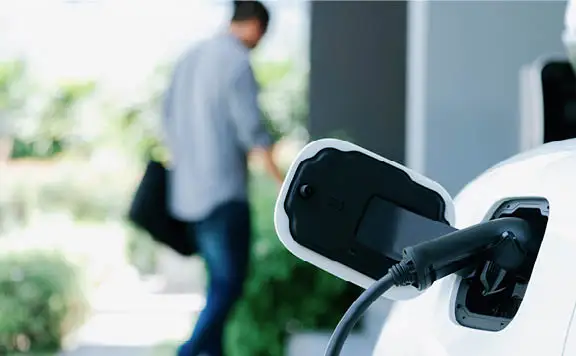
Homeowner leaving his EV to charge at home


Types of EV charging solutions

Level 1 charging (standard outlet)

The most basic form of EV charging uses a standard 120V household outlet without smart features. It’s slow, often adding only 3-5 miles of range per hour, but requires no special equipment or installation. It is suitable for light use or as a backup charging option.

Smart plugs and adapters for EV charging

Lower-cost smart plug solutions add basic scheduling and remote control to standard Level 1 chargers. These are ideal for light EV users or renters who can’t install a wall-mounted unit. However, they typically lack fast charging speeds and advanced features like load management or solar integration.

Level 2 smart charging stations

Wall-mounted Level 2 chargers provide much faster home charging (up to 10x faster than a standard outlet). Many models offer Wi-Fi or cellular connectivity, allowing for scheduling, remote power monitoring and load balancing. These require a 240V circuit and professional installation but offer the best mix of speed and smart features for most homeowners.

DC fast charging (Level 3)

These high-powered public chargers use direct current (DC) to rapidly charge compatible EVs, often up to 80% charge in 20-30 minutes. Mostly found in commercial locations or along highways, they are essential for long-distance travel but are not typically available for home use.

Bidirectional (V2H/V2G) charging systems 

Next-generation smart chargers offer bidirectional charging, also known as Vehicle-to-Home (V2H) or Vehicle-to-Grid (V2G). These systems can not only charge your car, but also send power back to your home during outages or to the grid during peak hours. Still in early deployment, they represent the future of EV-grid integration.

Public smart charging networks

While not a home solution, public smart charging networks (like ChargePoint, Electrify America or Tesla Superchargers) often offer app-based controls, dynamic pricing and renewable energy integration. These are useful complements for EV owners who frequently travel or lack home charging access.

Charging an EV at home with solar? Get more back.

Earn unlimited buyback credits for excess solar energy exported to the grid with our Reliant Solar Payback Plus or Reliant Solar Payback Match plan.

Compare Reliant solar plans

Choosing the right smart EV charging solution in Texas

In Texas, where solar potential is high and grid conditions can vary widely, it’s important to choose an EV charging solution that balances cost, speed and long-term flexibility.

Factors to consider for Texas homes

Start by understanding how much you drive and how quickly you want to charge. Then consider your home's electrical setup:

  • Daily driving habits: Light EV drivers may be fine with a lower-cost smart plug, while daily commuters may benefit from a Level 2 charger with faster speeds and more features.
  • Garage or outlet access: Do you have a dedicated parking space with access to a 240V outlet? If not, installation costs may be higher.
  • Electrical panel capacity: Many Texas homes, especially older ones, have limited panel space. Choose a charger with built-in load management if you’re close to reaching capacity.
  • Solar or battery integration: If you already have solar panels or plan to install them, look for a charger that can coordinate charging with solar production or energy storage.

Be sure to think ahead. If you might add a second EV or upgrade your solar system in the future, consider selecting a system with room to grow, such as smart load sharing or solar-aware scheduling.

Installation and setup requirements

Smart EV chargers usually require professional installation, especially Level 2 units that need a dedicated 240V circuit. Here's what to plan for:

  • Installation costs: Home EV-charger equipment costs vary, but installation can range from $300 to $2,000*, depending on whether you need a panel upgrade, new wiring or trenching.
  • Permits and safety codes: In many Texas cities, you’ll need a permit and a licensed electrician. Always choose UL-listed equipment to meet code and qualify for incentives.
  • Wi-Fi or network access: Smart chargers need reliable connectivity to enable scheduling, app control and utility integration. If your garage has a weak signal, consider using a mesh Wi-Fi extender or an Ethernet connection.
  • Weather and outdoor use: For detached garages or carports, make sure your charger is rated for outdoor use (NEMA 3R or higher) to avoid electrical hazards, especially in areas prone to heat, wind or storms.

Don’t forget incentives and utility programs

Some Texas utilities offer EV-charging rebates, time-of-use plans or electricity demand response programs that can lower your installation and charging costs. Cities or co-ops may also have local EV charger incentives. There may even be energy efficiency federal tax credits to consider, though these may be changing under new laws. Check with your provider before buying. It could influence which charger you choose.


Man charging his EV at home


Advanced tips for maximum savings

Here are three next-level tips to help you achieve the most savings with smart EV charging:

Set target charge levels to extend battery life and save energy

Avoid charging to 100% unless absolutely necessary. Setting your charger to stop at around 80% can help prolong your EV’s battery health, reduce charging time and lower energy consumption, especially for daily commuting needs.

Prepare for seasonal changes in electricity rates and solar production

Adjust your charging schedule seasonally to account for changes in time-of-use pricing and solar availability.  For example, during the summer months, solar production peaks earlier in the day, so adjusting charging times accordingly can increase your savings

If you have smart home energy-management tools, you can configure them to help you automate these seasonal adjustments.

Consider bidirectional charging as a future upgrade

If your charger supports Vehicle-to-Home (V2H) or Vehicle-to-Grid (V2G) technology, you may be able to sell stored energy back to the grid or power your home during outages. This can create additional savings and resilience in the future.

Integrated home energy systems

Some advanced chargers integrate directly with smart devices, solar inverters, home batteries and energy management systems. These solar EV charging solutions allow your EV to charge using your own solar power, shifting charging to avoid high loads in your home and respond to real-time utility prices. They're ideal for energy-conscious Texas homes with solar + storage.


Smart charging at home today

Smart EV charging helps Texas homeowners lower charging costs, protect home electrical systems and get more value from solar and smart home integrations. Start by assessing your driving needs, electrical capacity and local rate options. Then choose a smart charger and app that fit your home and budget.


Shop all of our electricity plans

Count on Reliant to help you make more informed, empowered choices in all the ways you use energy. Ready to find your Reliant electricity plan?

Start shopping

Frequently asked questions

Show all answers
Is smart EV charging worth it?

Yes, smart EV charging is worth it for most homeowners, especially in Texas, where time-of-use electricity plans, solar incentives and high peak demand make energy management more important. Smart charging helps lower your energy bills, avoid overloading your home’s electrical panel and make better use of solar or off-peak rates. Over time, these savings and protections can more than offset the cost of a smart charger.

Fast charging refers to the speed of charging, typically using DC fast chargers (Level 3) that can add 100+ miles of range in under 30 minutes. These are usually found at public charging stations.

Smart charging refers to how and when your EV charges, usually via a Level 2 charger at home. Smart charging systems optimize your charging schedule based on your electricity rate plan, solar production, grid conditions or your preferred departure time, helping reduce energy costs and grid impact without sacrificing convenience.

Most Level 2 smart chargers require a dedicated 240V circuit, which involves working with high-voltage wiring. In Texas (and most states), this type of installation typically requires a licensed electrician. 

Installing it yourself without proper permitting can void warranties, disqualify you from rebates or utility programs and pose a fire or shock hazard if done incorrectly. Some Level 1 smart plugs (used with standard outlets) may be safe for DIY setup, but even then, you should ensure the outlet is grounded and rated for continuous charging loads.

Yes. Some smart charging systems support load sharing, which allows multiple EVs to charge on the same circuit without overloading it. You can schedule each vehicle individually or let the system prioritize based on time of day or departure needs, which is ideal for two-EV households.

Most smart chargers will continue charging your EV based on your last schedule or settings if the Wi-Fi drops. However, you may temporarily lose access to remote controls, real-time data or utility signals. Some chargers also have offline backup modes to prevent disruptions.

Most Level 2 smart chargers use a universal J1772 connector, which works with nearly all non-Tesla EVs. Tesla vehicles require an adapter for third-party chargers. Always check compatibility before purchasing, especially for advanced charging features like load sharing or solar integration.

Charging at home will increase your electricity usage, but smart charging helps minimize the cost by shifting charging to off-peak hours or solar-powered windows. For most Texas drivers, the added cost is significantly less than fueling a gas car, especially with time-of-use or EV-specific rate plans. For more energy resources and ways to save, visit our information center.

View more +