
-
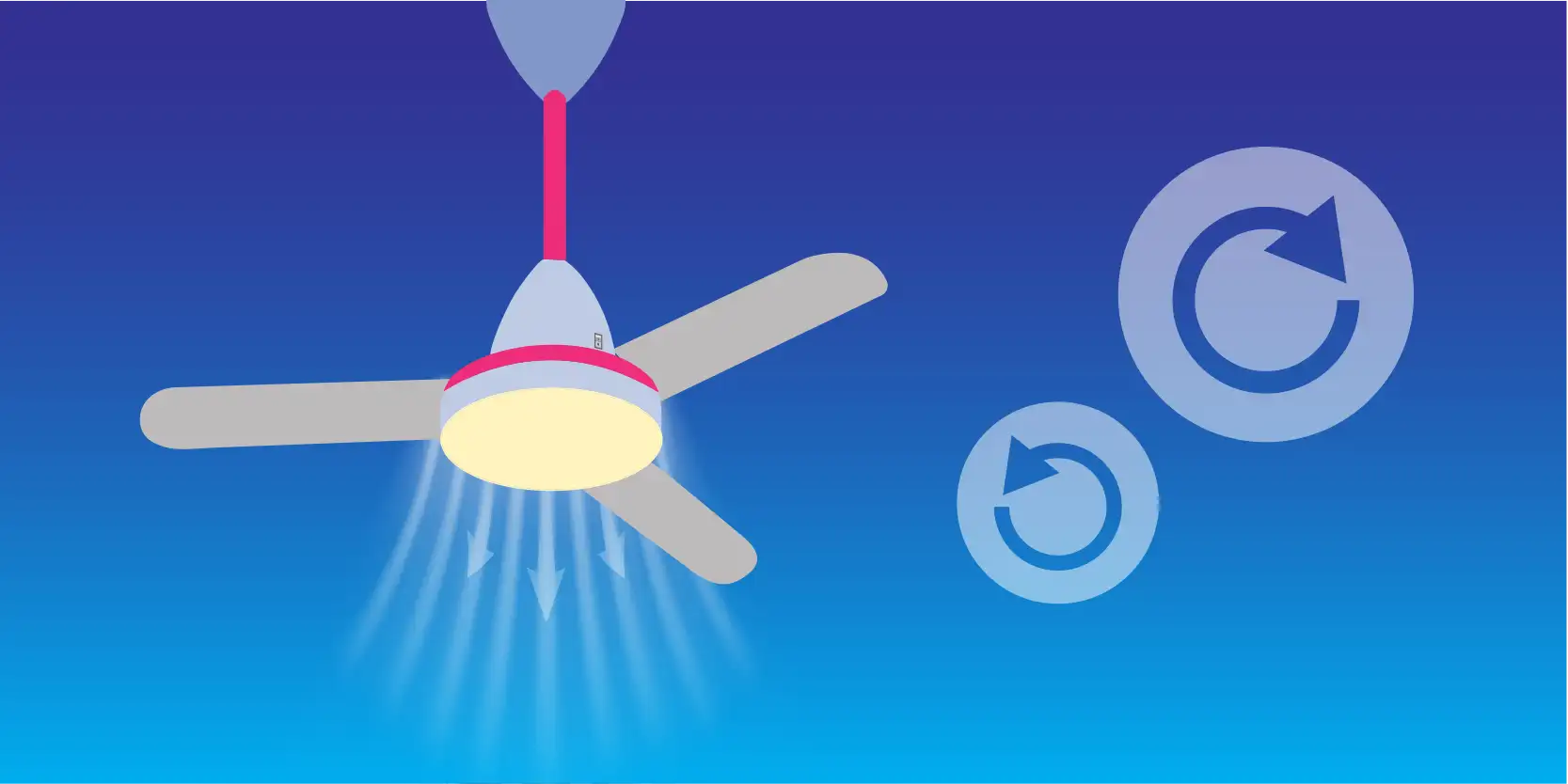
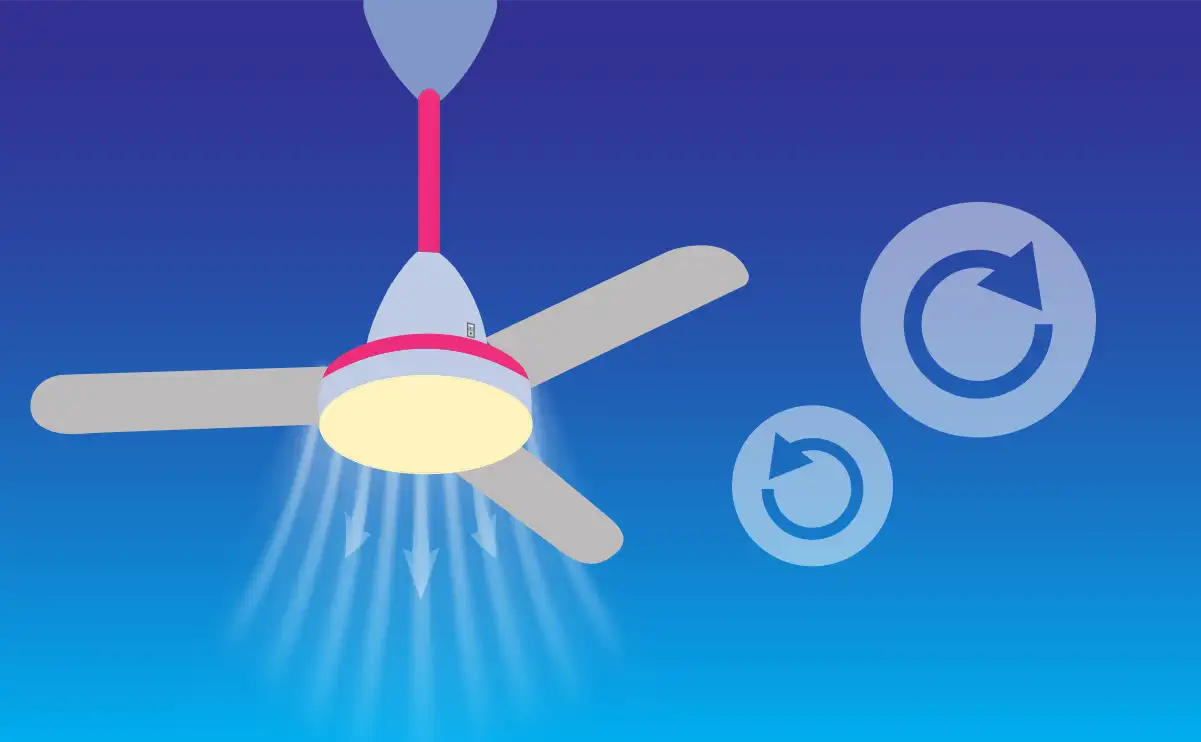
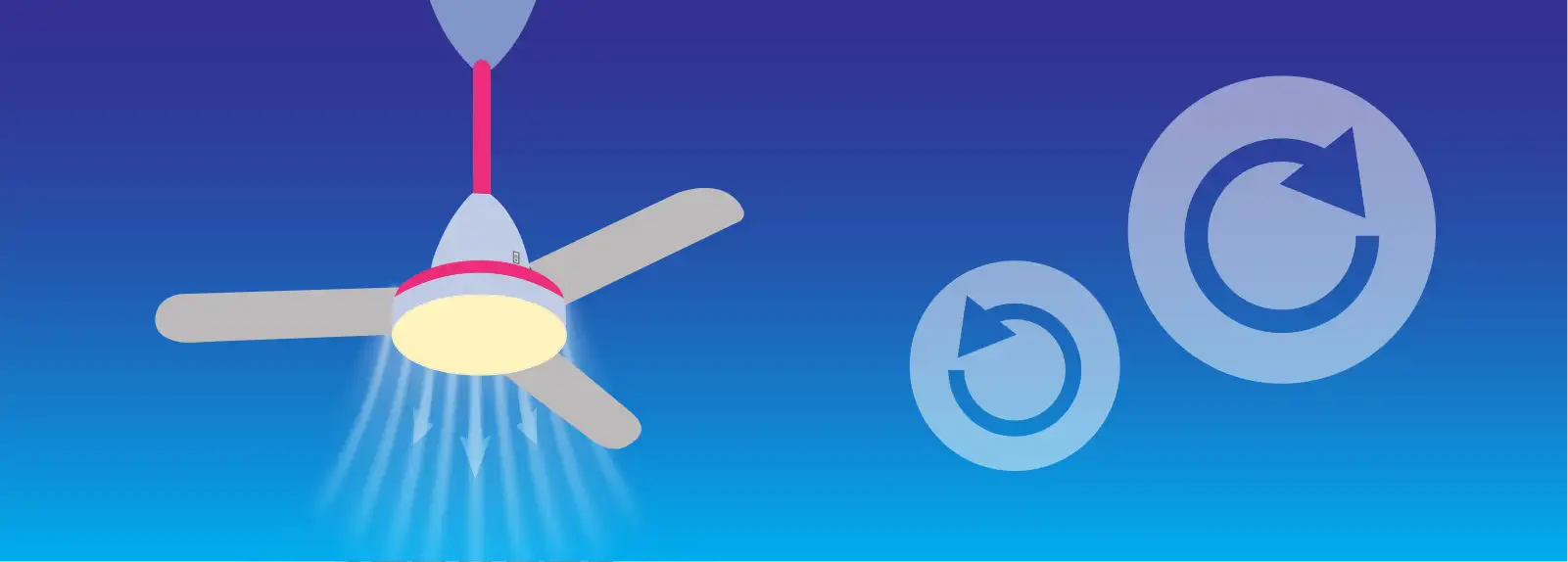
In summer, your ceiling fan should spin counterclockwise (when viewed from below) to push air down and create a cooling breeze.

The best ceiling fan direction for summer and winter savings
Have you been looking up at your ceiling fan and wondering if it's spinning the right way for the season? Getting it right can help you save money on your energy bill.
The best ceiling fan direction for summer and winter savings
Have you been looking up at your ceiling fan and wondering if it's spinning the right way for the season? Getting it right can help you save money on your energy bill.
Have you ever heard that you can easily save a few bucks by switching the direction of your ceiling fan in summer versus winter? While ceiling fans don’t actually change the temperature in a room, they do move air to help evenly distribute conditioned air and can help make your room feel more comfortable. Here, we’ll discuss how to use your ceiling fans to help reduce your energy bills and how the direction in which your ceiling fan rotates affects your energy use throughout the year.
The direction in which the fan blades turn on your ceiling fan is what determines whether the airflow creates a cooling breeze (downdraft) or gently redistributes warm air trapped near the ceiling (updraft).
Your ceiling fan uses significantly less energy than either the heating or the cooling components of your HVAC system. During hot, humid summers that are common to Texas and the South, a ceiling fan’s downdraft can make your home feel cooler without overworking the AC. During cold snaps, a slow updraft helps distribute heat and reduce heating runtime while keeping your heating system running efficiently.
Changing your ceiling fan's direction is key to reducing HVAC runtime and reducing energy use. By using the correct setting for the season, you can help give your heating and cooling systems a break and stay comfortable all year.
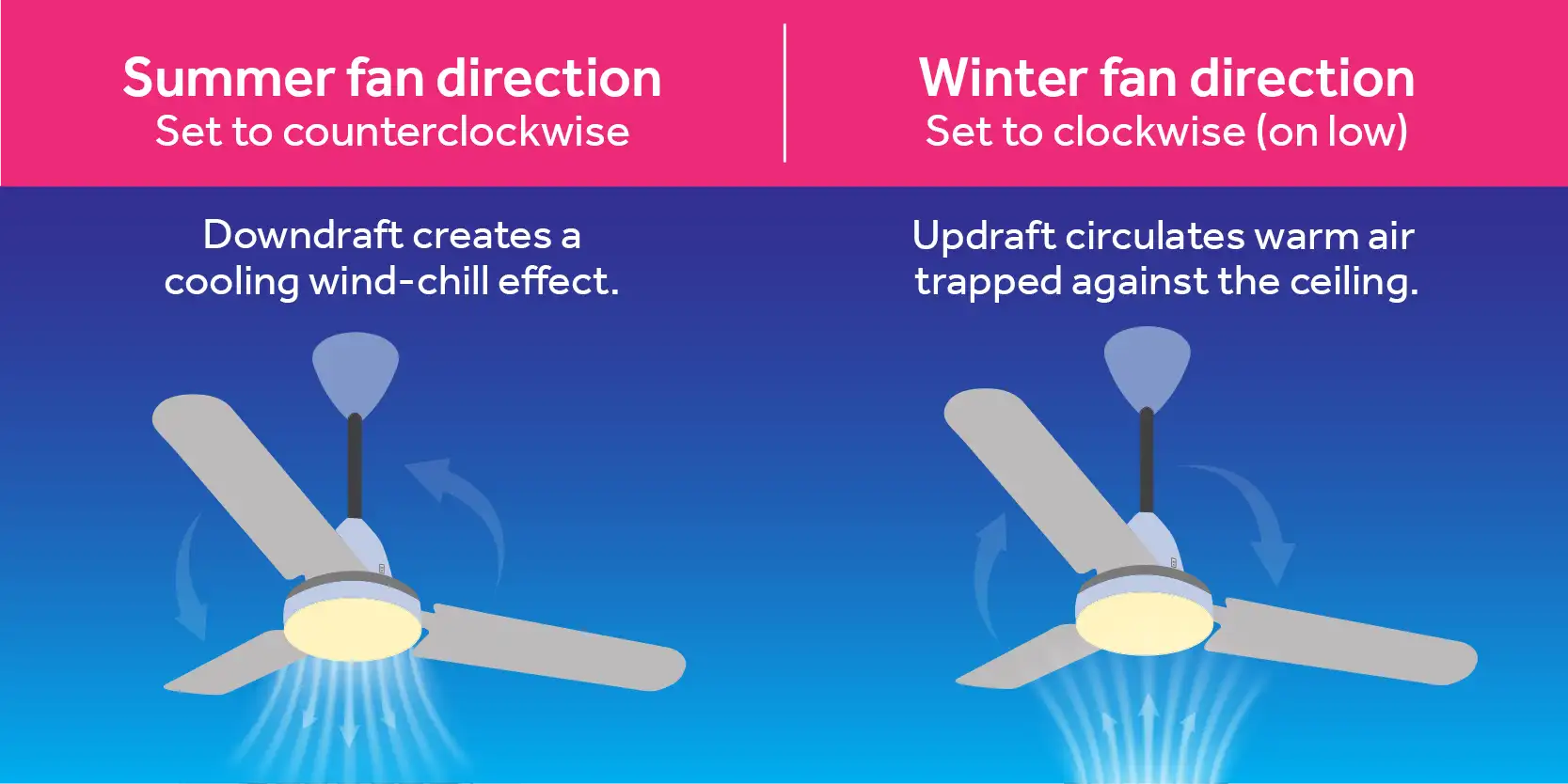
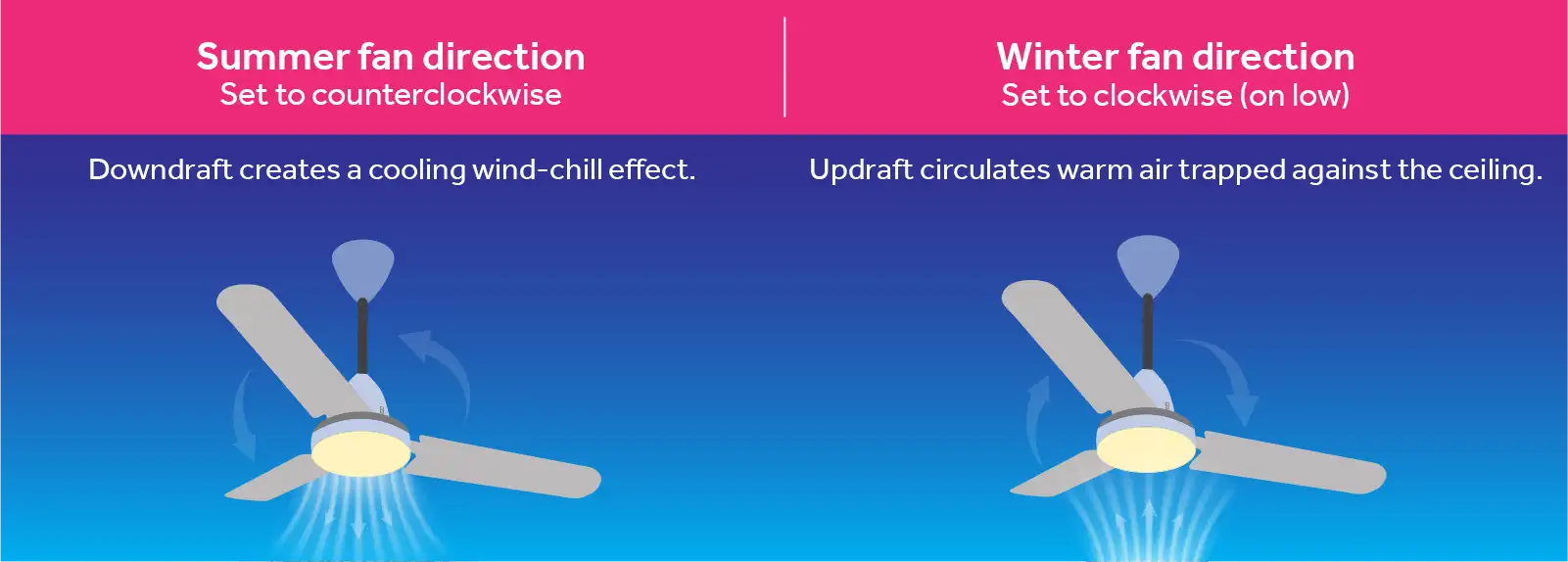
How it works: This direction creates a direct downdraft. While it doesn’t change the room temperature, this "wind-chill effect" helps make the room feel cooler.
How it works: On a low speed, this direction pulls cool air up. This displaces the warm air trapped at the ceiling, pushing it down along the walls to warm the living space without creating a draft.
You can help reduce your energy bill by using your ceiling fan more efficiently:
In the old days, reversible motors didn't exist, and, since ceiling fans only spun in one direction, they were mostly turned off during the winter months. Now, for most ceiling fans, you can change direction by simply flipping a switch or using smart controls, giving you the power to control airflow during every season.
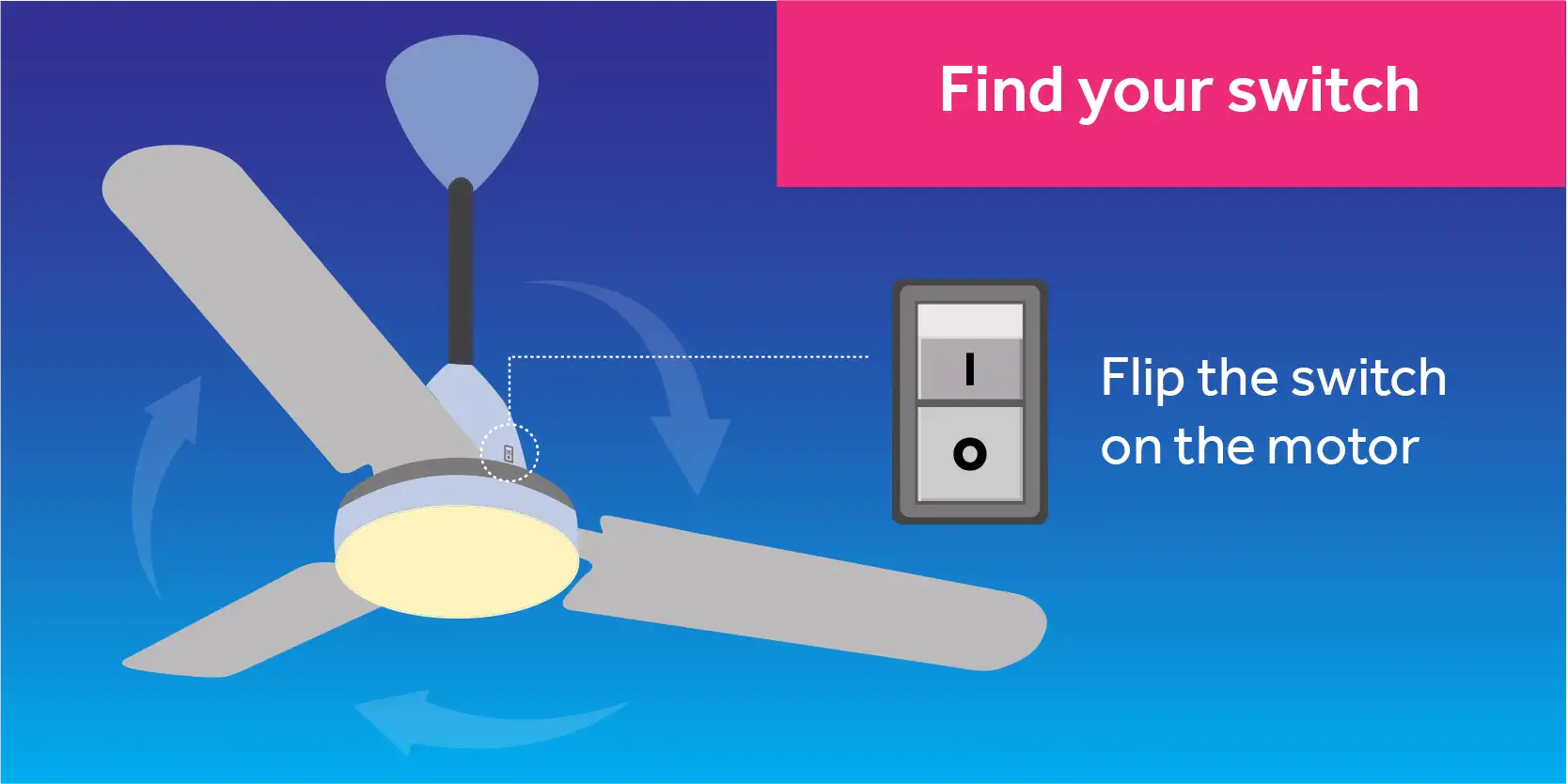
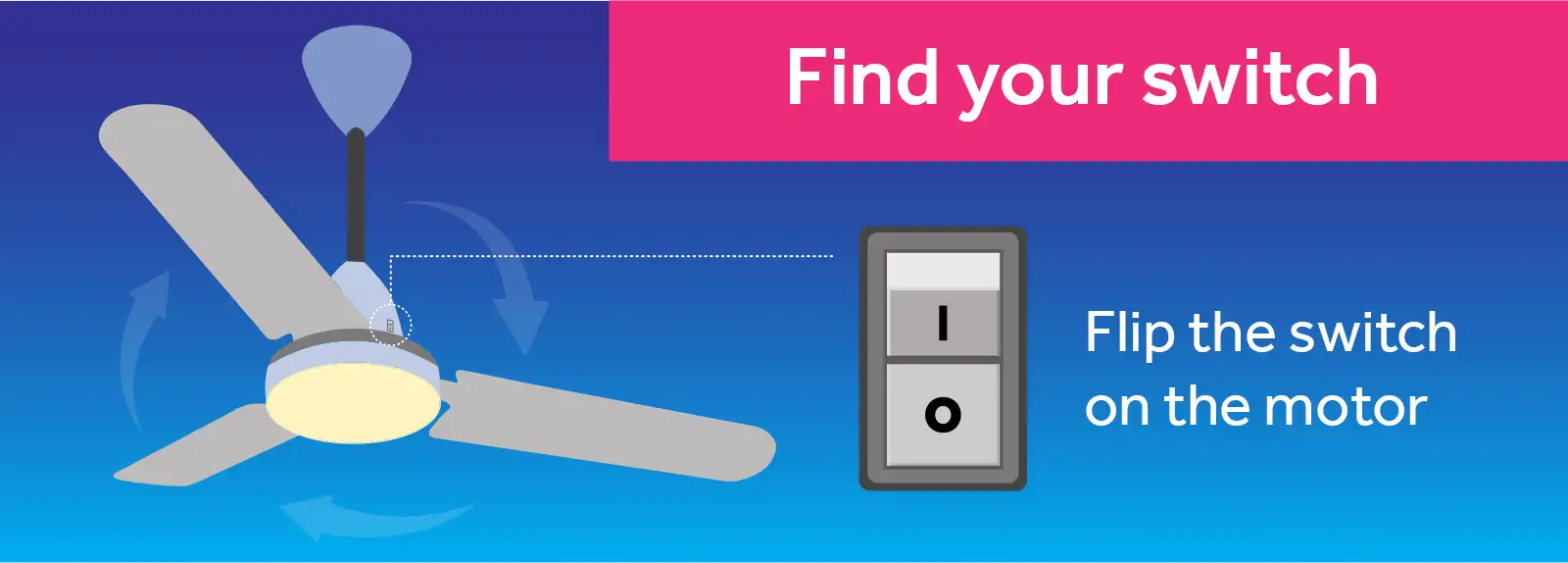
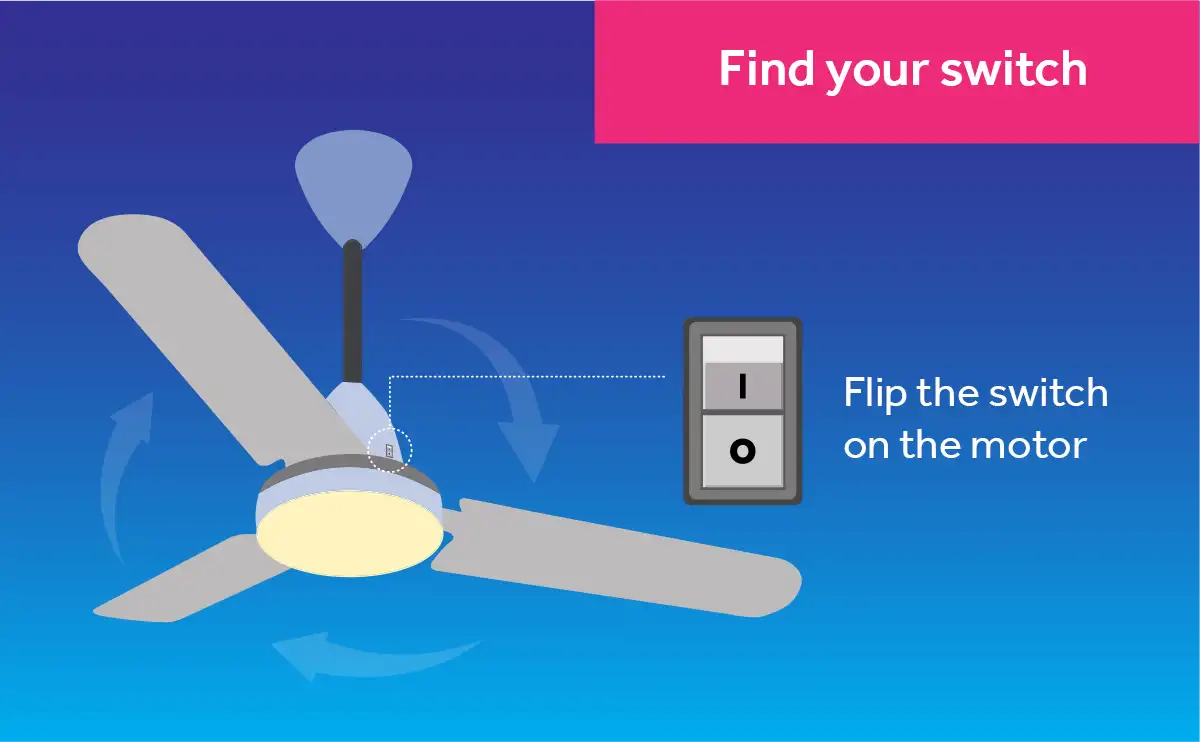
○ Summer: Counterclockwise — you should feel a gentle breeze when you stand under it.
○ Winter: Clockwise on low — you shouldn’t feel a breeze from below.
For smart ceiling fans, open the fan’s app or use the remote control and look for settings like direction, reverse or seasonal mode. Many third-party smart wall controllers change fan speed only, not direction. If reverse isn’t available there, use the fan’s app/remote or the housing switch.
These common ceiling fan slip-ups can quickly undo any homeowner’s energy-saving efforts:
Neglecting maintenance: Dust buildup and wobbly blades reduce airflow and waste power. Regularly clean your fan and tighten screws to ensure that it runs efficiently and safely.
Using the wrong fan: A fan that’s too small, mounted too high, or lacks a reverse function won't be effective. Choose a reversible model appropriately sized for your room and installed 8-9 feet from the floor for optimal performance.
Ignoring your electricity plan: If you're on a time-of-use plan, running your air conditioner during peak hours can be expensive. Rely on your fan’s wind-chill effect during these times and run the AC more during cheaper, off-peak hours.
Changing your ceiling fan direction seasonally is a simple and low-cost way to improve the comfort in your home, and you can even automate the process using smart home automation controls. Start by checking the direction of your ceiling fan today — a simple switch could make your home more comfortable and reduce your overall energy costs.
Want more ways to save? Explore Reliant’s energy-saving tips and electricity plan options to find the best fit for your home.
Select a category from the dropdown menu.
In summer, your ceiling fan should spin counterclockwise (when viewed from below) to push air down and create a cooling breeze.
In winter, your ceiling fan should spin clockwise on low speed to gently circulate warm air down the walls without creating drafts.
To change your ceiling fan’s direction:
For safety, always power off the ceiling fan switch on your wall or breaker before inspecting, wait for the blades to stop and avoid moving the blades by hand.
Ceiling fans don’t actually cool or heat air, but they do allow you to feel cooler or warmer. This allows you to set your thermostat higher in summer months and lower in winter months, resulting in less wear and tear on your HVAC system and leading to energy savings over time.
Yes. A fan directly under a supply vent can fight the air circulation and cause drafts or noise. If possible, position the fan a few feet away from the vents and aim the supply louvers away from the blades. Use lower fan speeds when a vent is very close, so you mix the air without turbulence. Avoid blowing air straight into a return vent.
Aim for a blade height of about 8 to 9 feet above the floor for best performance. Keep at least 7 feet of clearance for safety. For higher ceilings, use a downrod to position the blades within the 8-to 9-foot zone.
Only a few non‑ceiling fans are reversible. For summer cooling, reversal isn’t needed — any fan that blows air directly on you can deliver similar comfort and let you raise the AC setpoint. For winter heating, most non-ceiling fans won’t match a reversed ceiling fan’s gentle air circulation because they sit lower and tend to create drafts; exceptions include high-mounted reversible fans or some wall/industrial models placed near the ceiling.


