Welcome back! Pick up where you left off.

Confirm your plan and zipcode
Select from 3 of our most popular plans for your zipcode
2 days free per week
100% solar

Reliant Flextra Credits 24 plan

Get your 2 highest-use days a week FREE + $200 in bonus bill credits for extra savings.


Fixed rate
Price protection

Reliant Secure Advantage 24 plan

Straightfoward plan with a locked-in energy charge.


For renters
Popular in your area

Reliant Apartment 12 plan

Designed exclusively for smaller spaces.


Term
2 Months
Rate
Fixed

Pricing Details

USAGE
AVG PRICE / KWH
500 kWh
1,000 kWh
2,000 kWh

Early cancellation fee

Plan Features
Product

Pricing Details

USAGE
AVG PRICE / KWH
500 kWh
1,000 kWh
2,000 kWh

Early cancellation fee

*Average Price per kWh assumes noted usage per month and specific LP&L Delivery Charges (i.e., Residential Service or Residential Distributed Renewable Generation Service). For additional information regarding plan pricing and other terms, please see the Electricity Facts Label, on the Plan Details page. Price shown is for new customers only.

Honoring Black Texans who shaped our future


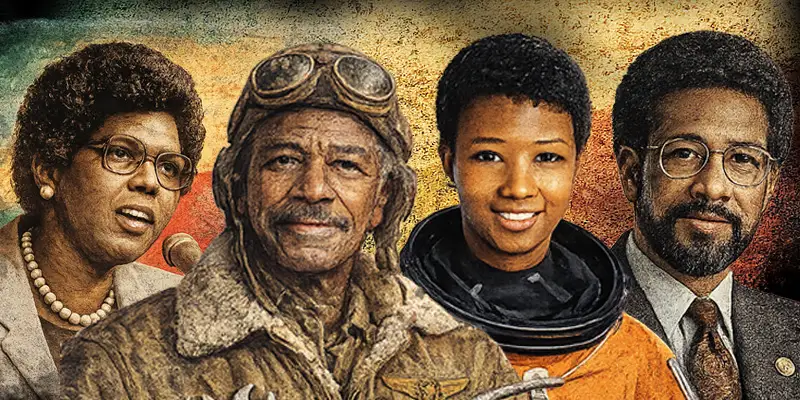
As we celebrate Black History Month in Texas, we’re honoring four Black Texans who helped shape our future through their achievements in government, aviation, space exploration and public service. By recognizing these Black Texans, we celebrate the lasting impact of their leadership and the powerful legacy they’ve created for generations to come. 

Honoring Black Texans who shaped our future

Honoring Black Texans who shaped our future


As we celebrate Black History Month in Texas, we’re honoring four Black Texans who helped shape our future through their achievements in government, aviation, space exploration and public service. By recognizing these Black Texans, we celebrate the lasting impact of their leadership and the powerful legacy they’ve created for generations to come. 

Published Date: February 01, 2026

Barbara Jordan: A legend in leadership and public service

Born in Houston’s Fifth Ward in 1936, Barbara Jordan grew up in a tight‑knit community shaped by faith, family and a deep belief in the power of education. A standout student and talented debater, she graduated with honors from Phyllis Wheatley High School before attending Texas Southern University, where she strengthened the public‑speaking skills that would later define her career. 


"One thing is clear to me: We, as human beings, must be willing to accept people who are different from ourselves."

— Barbara Jordan, American lawyer, educator and politician


After earning her law degree from Boston University, Jordan returned to Houston to practice law and pursue public service. She ran twice for the Texas House before winning a seat in the Texas Senate in 1966, becoming the first Black woman elected to that body and the first Black state senator in the U.S. since the 1880s. In the Senate, she focused on fairness and opportunity, championing measures that advanced workers’ rights and protected Texans from discrimination. 

In 1972, Jordan was elected to the U.S. House of Representatives, becoming the first Black woman from the South to serve in Congress. Her calm, commanding presence and unwavering commitment to the Constitution made her a respected voice during pivotal moments in American history, including the Watergate hearings. Throughout her time in Washington, she remained focused on expanding civil rights protections and strengthening democratic institutions.

After leaving Congress, Jordan continued making an impact as a professor at the LBJ School of Public Affairs at The University of Texas at Austin. There, she mentored future public servants and encouraged rising leaders to approach policy with integrity, compassion and a clear sense of purpose. Barbara Jordan’s legacy is a testament to courage, service and the belief that government, can and should, work for everyone.

Buford Johnson: The Tuskegee Airman who changed aviation history

Buford Alvin Johnson, born in 1927 in Texas, grew up during a time when opportunities for Black servicemen were limited, yet he always believed he was meant to fly. That determination eventually led him to become one of the most accomplished aircraft mechanics and crew chiefs of the Tuskegee Airmen. This legendary group of Black military aviators helped break racial barriers in the U.S. Armed Forces.

Johnson enlisted in the U.S. Army Air Forces at 17 years old and trained at Tuskegee Army Air Field. As part of the 332nd Fighter Group, he maintained aircraft that supported Allied missions in World War II. Though he was stationed in the U.S. during the war, his work ensured that the aircraft flown by the famed Red Tails were reliable, competitive and ready for combat. 


“We did the best job every time. We were not even thinking about desegregation but doing the best job we can do.”

— Buford Johnson, World War II veteran and former Air Force master sergeant, 2013


After World War II, Johnson continued serving through the Air Force, becoming the first Black jet aircraft crew chief, and later played a vital role during the Korean War, in which the squadron he supported earned a Presidential Unit Citation for its performance. His expertise and leadership helped pave the way for future generations of Black airmen working in aviation, engineering and aircraft maintenance.

After more than 20 years of service, Johnson retired from the military and built a life dedicated to family, mentorship and community involvement. He remained an active voice in sharing the story of the Tuskegee Airmen, ensuring that younger Texans understood the perseverance, excellence and pride behind their accomplishments. Buford Johnson passed away in 2017 at the age of 89, leaving behind a legacy of service, skill and quiet leadership.

Mae Jemison: The first Black woman in space 

Mae Carol Jemison was born in 1956 in Decatur, Alabama, to Charlie and Dorothy Jemison. At the age of 3, she and her family moved to Chicago, Illinois, where she developed an interest in space.  

As a child, she watched the Apollo missions and the classic sci‑fi series "Star Trek". The show’s Lieutenant Uhura, a Black astronaut and high‑ranking female officer, inspired her to imagine new possibilities in space exploration. 

Dr. Jemison took her studies seriously, graduating high school at just 16 years old. She continued her studies at Stanford University, where she joined and eventually led the Black Student Union after experiencing racism in her life and throughout her academic journey.  


“In college, very often I was the only African American woman in many of my classes and work environments. There hadn't been many African American women in some of the schools I attended; in engineering, for example. It would be nice, and I think it will be nice, to have more and more people of all kinds involved with space exploration.”

— Dr. Mae Jemison, 2023


Dr. Jemison earned degrees in chemical engineering and African American studies from Stanford, then completed her medical degree at Cornell University Medical College, gaining experience in Cuba, Kenya and Thailand. After practicing medicine in Los Angeles and serving in the Peace Corps, she joined NASA in 1987 and became the first Black woman in space in 1992. 

She later taught at Dartmouth, founded the Jemison Group and now leads the 100 Year Starship project from Houston to develop a plan for future interstellar travel.

George Thomas “Mickey” Leland: a rising force in Texas politics

George Thomas “Mickey” Leland was born in 1944 and raised in Houston’s Fifth Ward. Growing up in a working‑class neighborhood shaped his belief that public service should focus on improving lives, expanding opportunities and ensuring that every person is treated with dignity. That foundation guided his path as a student leader, advocate and, eventually, a national figure committed to humanitarian causes. 

Leland attended Texas Southern University, where he became known for his activism and leadership. After graduating, he worked to improve healthcare access for low‑income Houstonians by helping launch community programs focused on reducing medical disparities. His early work reflected his belief that policy should support people directly in their communities, an approach that continued to guide his political career. 

In 1972, Leland was elected to the Texas House of Representatives, where he continued to work to expand healthcare access and essential services for marginalized communities. His commitment to service and social justice carried him to the national stage in 1978, when he was elected to the U.S. House of Representatives.  

Representing Texas’ 18th Congressional District, he focused on reducing poverty, fighting hunger and supporting humanitarian efforts worldwide. As chair of the House Select Committee on Hunger, he helped lead bipartisan efforts to address global food crises and strengthen nutrition programs.
 

“I cannot get used to hunger and desperate poverty in our plentiful land. There is no reason for it. There is no excuse for it, and it is time that we as a nation put an end to it.”

— Mickey Leland, The Washington Post, 1985


Leland’s compassion extended beyond legislative chambers. He traveled to areas affected by famine and conflict, working with global partners to deliver relief and raise awareness. His hands‑on leadership and advocacy earned national and international respect, reflecting his belief that public service requires both empathy and action.

While on a humanitarian mission to Ethiopia in 1989, Leland died in a plane crash. His passing was felt deeply across Texas and around the world, but his success lives on through the programs he championed and the lives he impacted. 

Celebrating Black history and the future of Texas

The stories of these Black legends help power the Texas we know today. From breaking barriers in leadership to driving innovation across industries, they have courageously has paved the way for a brighter, more inclusive future. And as Texas continues to grow, their impact lights the path for new generations of changemakers.