Welcome back! Pick up where you left off.

Confirm your plan and zipcode
Select from 3 of our most popular plans for your zipcode
2 days free per week
100% solar

Reliant Flextra Credits 24 plan

Get your 2 highest-use days a week FREE + $200 in bonus bill credits for extra savings.


Fixed rate
Price protection

Reliant Secure Advantage 24 plan

Straightfoward plan with a locked-in energy charge.


For renters
Popular in your area

Reliant Apartment 12 plan

Designed exclusively for smaller spaces.


Term
2 Months
Rate
Fixed

Pricing Details

USAGE
AVG PRICE / KWH
500 kWh
1,000 kWh
2,000 kWh

Early cancellation fee

Plan Features
Product

Pricing Details

USAGE
AVG PRICE / KWH
500 kWh
1,000 kWh
2,000 kWh

Early cancellation fee

*Average Price per kWh assumes noted usage per month and specific LP&L Delivery Charges (i.e., Residential Service or Residential Distributed Renewable Generation Service). For additional information regarding plan pricing and other terms, please see the Electricity Facts Label, on the Plan Details page. Price shown is for new customers only.
Energy saving tips for home appliances

Energy saving tips for home appliances

Appliances require a great deal of energy and can have a big impact on your energy bill.

Energy saving tips for home appliances

Energy saving tips for home appliances

Appliances require a great deal of energy and can have a big impact on your energy bill.

Top energy-saving tips for common household appliances

Practicing energy conservation with your home appliances is a powerful way to make a positive impact on your wallet. Reducing your energy consumption can help lower your monthly electricity bill and, as an added benefit, can help decrease your carbon footprint. While upgrading to a new, energy-efficient model is a great long-term investment, there are numerous budget-friendly strategies you can adopt today. These simple adjustments to your daily routines may require a little more dedication but can help you achieve a more energy-efficient life and save money all year.

Illustration of a laundry and dryer machine

Washers & dryers

Being smarter about washer and dryer routines is an easy way to live life more energy efficiently. Apply a few of these tips to your laundry routine.

  • When washing clothes, run larger loads instead of several smaller loads to reduce energy usage.
  • Opt for cold water when washing clothes as up to 90% of the energy used for washing clothes comes from heating the water.1
  • Run 2 or more loads of laundry in the dryer back-to-back to get the most out of the heat buildup.
  • Take advantage of the dryer's moisture sensor, which ends the cycle once your clothes are dry.
  • Clean the lint tray after every dryer load to cut down on how hard your dryer must work.

Illustration of a kitchen refrigerator

Refrigerators and freezers

Check out these tips to get the most out of your refrigerator and freezer.

  • Replace old refrigerators with a newer model that consumes less energy and consider a smart refrigerator model to help maximize efficiency. Look for the ENERGY STAR® logo when purchasing a new refrigerator.2
  • Cover all liquids in the refrigerator as moisture inside can require the unit to use more electricity.
  • Avoid storing your freezer in the garage as high temperatures make the unit work harder.

Illustration of a kitchen stove counter

Ovens and stoves

Ovens and stoves can require a good amount of electricity to heat up food. Follow these tips to reduce electricity required when cooking.

  • Use the right size pot on burners and secure your pans with tight-fitting lids to contain heat.
  • Microwave to reheat food instead of using the oven to reduce energy required.
  • Grill outdoors in the summer. Cooking indoors raises the heat, requiring the AC to use more electricity.

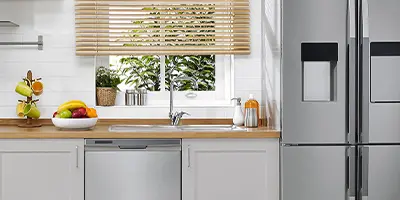
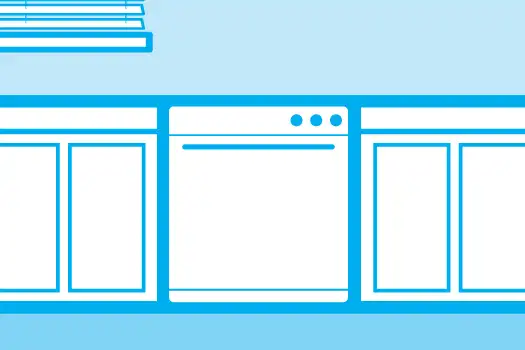
Illustration of a kitchen dishwasher

Dishwashers

Dishwashers require electricity to heat up water and dry loads of dishes. You can make changes to your typical dishwashing routine to cut back on how much water and heat you use by applying these simple tips.

  • Maximize efficiency by only running your dishwasher when completely full. An ENERGY STAR® certified model uses significantly less energy (around 12%) and water (under 30%) compared to a standard dishwasher, saving resources with every cycle.3
  • Avoid using the heat-dry option, which increases the electricity usage. Using a no-heat or air-dry option can reduce your dishwasher's total energy consumption for that cycle by 15% to 50%.4
  • If you're going to run the dishwasher soon, scrape your dishes after you eat rather than rinsing them. Rinsing them uses lots of water and energy. However, if it will be a while before the dishwasher is run, rinse the dishes to prevent food remnants from drying and sticking to your dishes.

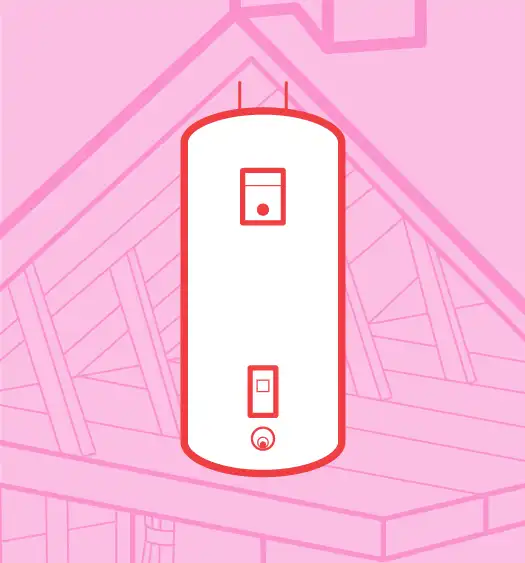
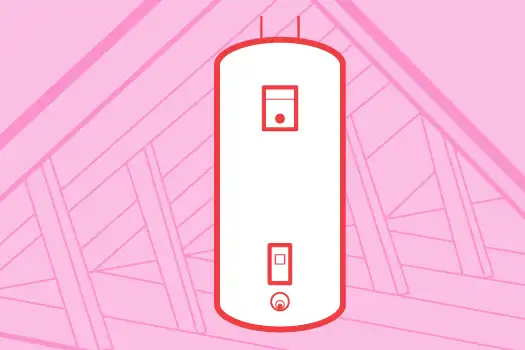
Illustration of an attic water heater

Water heaters

Water heating accounts for about 18% of your home's energy use.5 If not managed and maintained well, water heaters can use an excessive amount of energy. Take these steps to increase the efficiency of your water heater.

  • Purchase an energy-efficient water heater or even a smart water heater to help save energy in the long-term.
  • Upon installation, your water heater is typically set at a higher temperature than necessary. Turning down the temperature of your water heater allows it to consume less energy.6
  • Install low-flow fixtures to use less water per minute.

Implementing energy-saving habits

Adopting an energy-efficient lifestyle doesn't have to be overwhelming. The key is to make small, consistent changes to your daily routine. Start by being mindful of turning off lights when you leave a room and unplugging electronics when they're not in use. You can also make simple adjustments to how you use major appliances, like running your dishwasher only when it's full or washing clothes in cold water. To make these habits even easier, consider integrating smart devices into your home. Smart plugs can automatically turn off devices, and smart lighting can be scheduled or controlled remotely, ensuring you're only using energy when you need it.

Smart home devices for energy monitoring

Take control of your energy usage with tools that provide insight and automation. Smart home systems, like those from Vivint, offer devices that can make a real difference. For example, the Vivint Smart Thermostat learns your preferences and optimizes your heating and cooling schedule to reduce waste. Beyond the thermostat, you can discover even more ways to improve your home's efficiency with some lesser-known smart home devices.

In addition to smart hardware, Reliant provides powerful energy management tools to customers. By logging into your online account, you can access your weekly energy usage report, projected bill and other personalized insights. These tools help you understand your consumption patterns and identify the best ways to save.
Shop all of our electricity plans

Reliant has electricity plans for any lifestyle and budget. Shop, compare and choose the one that's right for you today.

ZIP is required

Frequently asked questions

Show all answers

Approximately 75-90% of the energy your washing machine consumes is used to heat the water. By choosing the cold-water setting, you significantly reduce this energy demand. Modern detergents are formulated to be just as effective in cold water, so you can achieve a great clean while saving substantially on your energy bill.

Consider replacing your refrigerator if it was manufactured before 2001. Refrigerators from that era can use twice as much energy as a new ENERGY STAR certified model. If your current unit is over 15 years old and requires frequent repairs, upgrading is often the most cost-effective and energy-efficient choice.

You can improve your current refrigerator's efficiency by setting the temperature between 35-38°F, keeping the freezer at 0°F and ensuring the door seals are airtight. Regularly clean the condenser coils on the back or bottom of the unit to help it run cooler and use less energy. Also, keeping the fridge relatively full helps maintain its temperature, but avoid over-packing, which can block air circulation.

The most efficient method is to always run the dishwasher with a full load, scrape food off plates instead of pre-rinsing them and use the air-dry or no-heat setting. Using a modern dishwasher is typically more energy and water-efficient than washing the same number of dishes by hand.

For an ideal balance of comfort and energy savings, the U.S. Department of Energy recommends setting your water heater to 120°F. Many units are set to a default of 140°F, so lowering it can reduce your water heating costs by up to 10% and also slow mineral buildup in your pipes.